Technology Partnership for Maximum Precision in Pharmaceutical Primary Packaging

Bausch+Ströbel is a global partner in pharmaceutical production. Since 1967, the family-owned company based in Ilshofen has been developing solutions and services for the safe, flexible, and aseptic filling of medications. With a focus on quality, innovation, and customer proximity, Bausch+Ströbel supports pharmaceutical companies worldwide in making their production processes reliable and efficient – and helps ensure that essential medicines and vaccines are available across the globe.
In developing highly automated systems, Bausch+Ströbel works closely with specialized technology partners – including Bucher Automation for more than 30 years. One example of this successful collaboration is a complex production line for syringe conditioning, implemented through close technical coordination between the two companies.
A Highly Complex Process Chain for Pre-Filled Syringe Conditioning
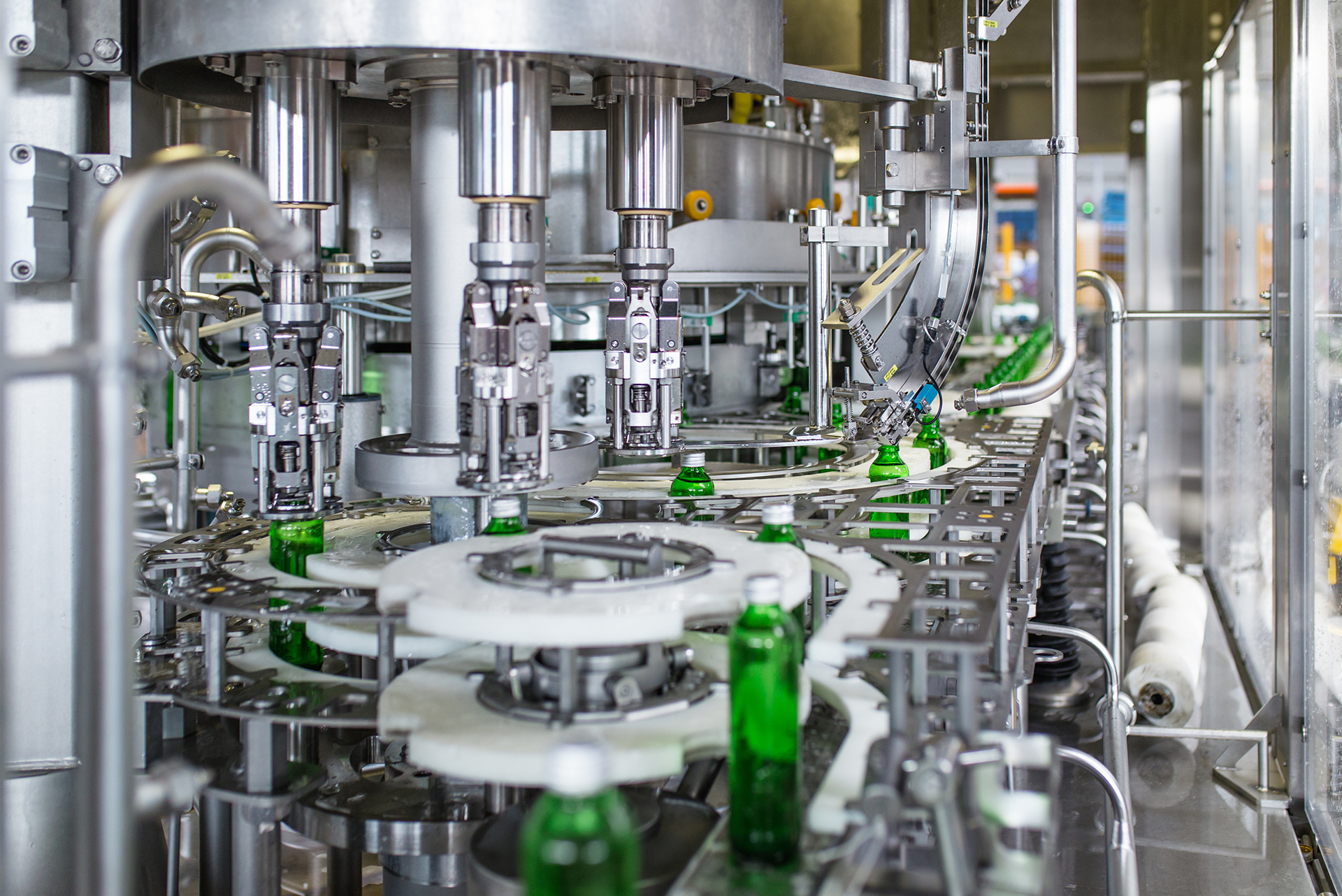
The technical challenge in implementing this project was not only the large number of process steps, but above all their precise synchronization. Each station must communicate with millisecond accuracy, perform partly complex manipulations, and at the same time maintain the highest cycle rates – a requirement profile that would not have been achievable without powerful automation solutions.


In such an intricately linked process chain, with a whole series of machines – including de-nesting, inspection, cleaning, insertion, and closing units – precise timing and synchronization down to hundredths of a second are crucial. Every transfer, every handling step must be handed over to the next function with absolute accuracy – both mechanically and in terms of control technology. Only in this way can the stringent requirements for particle cleanliness, integrity, and cycle performance be reliably met."
Reliable Partnership in Control System Integration
The technical collaboration between Bausch+Ströbel and Bucher Automation was characterized by a clear division of responsibilities and a high level of mutual reliability. Control programming was carried out directly at Bausch+Ströbel, which was also responsible for the mechanical and electrical assembly of the line.
Bucher Automation was responsible, among other things, for software integration – particularly for special solutions where external components and transport systems had to be taken into account. A key advantage: direct access to the development department. Requests were processed promptly, and when necessary, specialists came directly to the plant to work on solutions on-site.
This agile cooperation model enabled both partners to work efficiently and with an innovation-driven approach – while focusing on their respective core competencies.

Especially with demanding lines, a reliable partnership is key. With Bucher Automation, we not only have an experienced integration partner at our side – we also benefit from direct access to development engineers when quick technical fine-tuning is required. This close collaboration was crucial to the success of the project."

Intelligent Control as the Heart of the System
At the core of automation is the JetControl JC-960 controller from Bucher Automation. As the central hardware platform, it manages the complete control of I/Os, motion-control axes, and the networking of additional machine controllers and operator interfaces. The controller enables full real-time synchronization of up to 128 axes – a decisive factor for precise timing across multiple machine modules.
From Order to Delivery: A Timeline of Around 20 Months
The implementation of such a highly complex line takes place over several phases – from concept design to mechanical construction and software development, all the way to commissioning and qualification at the customer site. In total, the project duration is typically around 20 months, with approximately five months dedicated to automation, including software integration.
A significant time advantage resulted from the internal execution of many steps at Bausch+Ströbel: the integration of control components, hardware networking, and the complete application program were all carried out in-house. This approach reduced interfaces and optimized development times – particularly for standardized modules or recurring process architectures.

Automation as the Key to Efficiency, Quality, and Future Readiness

The high level of integration and automation in the line delivers significant economic benefits: error rates decrease, production downtimes are reduced, and the reproducibility of process steps is documented and validated – an essential aspect in a GMP environment.
At the same time, automation facilitates quick changeovers for product variations and enables predictive maintenance through digital diagnostic tools.
Looking ahead to future line generations, Bausch+Ströbel will introduce the new JetMove 2000 servo drive series. Depending on the control concept – whether centralized or decentralized – modular commissioning strategies can significantly shorten overall project timelines.
The series supports this approach by enabling easy integration and high dynamics at the module level. At the same time, production performance could be further increased through even more precise coordination of process steps.
A System That Delivers Today – and Is Ready for Tomorrow
The implemented line demonstrates its high process stability, reproducibility, and efficiency in daily operation. Thanks to the close coordination between mechanical engineering and control technology, a solution was created that not only meets today’s requirements but is also open to integrating future functionalities. For example, the JC-965EXT model will soon be CRA-compliant. They also offer significant improvements in terms of update capability and modular commissioning. This means both partners will continue to further develop the line with a focus on higher dynamics, shorter project timelines, and regulatory compliance.
The partnership between Bausch+Ströbel and Bucher Automation exemplifies how seamless automation combined with mechanical excellence can lead to sustainable competitive advantages – for machine builders, pharmaceutical customers, and ultimately for patients worldwide.

As part of our more than 30-year collaboration with Bausch+Ströbel, this project once again demonstrated our ability to transform even the most demanding automation technologies into future-proof solutions. We are also pleased that the close, partnership-based exchange and the sensible division of tasks with our customer led to a successful project completion.