Table of Contents
Why The Sealing Process Is Particularly Challenging For Machine Builders Today
Different materials and closure types, narrower process windows, and increasing line speeds are creating new challenges in bottle capping. For OEMs, this raises the question of how to reliably ensure precision, process reliability, and flexibility, even under changing production conditions.
This article examines the factors that determine machine-based bottle capping, where conventional machine concepts are reaching their limits, and how end-to-end automation can open up new opportunities for OEMs.
Increasing Requirements Are Pushing Mechanical Capping Concepts to Their Limits
For many years, bottle capping was considered a largely mastered technical process. As a result, many machine designs still in use today are based on proven mechanical solutions. However, the requirements have changed. New materials and closure geometries, narrower process windows, and increasing line speeds are driving greater complexity. In addition, new demands regarding closure design and product safety continue to emerge.
Many of these developments originate from changing requirements of brand owners for products, packaging, and logistics. At the same time, they present OEMs with opportunities for innovation. By developing more flexible machine concepts, OEMs can help bring new solutions into production economically and with high process reliability.
As this development continues, predominantly mechanical capping concepts are increasingly reaching their limits, limits that can only be extended to a certain extent through further design optimization. Wherever process variations can no longer be compensated reliably, precise control and continuous monitoring become essential.
Causes of Increasing Complexity
Material Diversity
Lightweight, thin-wall plastic bottles reduce material consumption and weight, but they also place higher demands on the capping process. These containers are more sensitive to mechanical loads, while the closure must still provide a reliable seal and be applied with a precisely defined torque.
Material elasticity, friction coefficients, and relaxation effects all influence capping behavior. These factors can vary depending on material type, batch, and production conditions, making them difficult to control through mechanical means alone. A controlled system must be able to detect such changes and compensate for them reliably.
Variants and Tolerances
Manufacturing-related variations in closure geometry, material properties, and quality are common. At the same time, acceptable torque windows are becoming increasingly narrow. Machines must therefore compensate not only for variations within a production batch but also for differences between batches.
Additional complexity arises because application torque and removal torque are not identical. Their relationship is influenced by factors such as thread geometry, friction, and top load. Static settings alone are therefore insufficient to ensure consistent and reproducible results under varying conditions.

Conflicting Objectives in the Capping Process
Torque vs. Container Stability
One of the key challenges is balancing secure closure application with minimal mechanical stress on the container. Excessive torque can damage the bottle neck or closure components, while insufficient torque may compromise seal integrity.
The behavior of the container under mechanical load must also be taken into account. Particularly with thin-wall containers and low target torque values, even minor deviations can become critical. Torque, material behavior, and mechanical stress must therefore be carefully coordinated and controlled to ensure a secure closure without compromising the container.
Speed vs. Precision
As line speeds increase, the available time to build up torque, monitor the process, and correct deviations becomes increasingly limited. At the same time, precision and process stability must be maintained even at high throughput rates.
Additional requirements arise in high-speed capping applications where both application and removal torque must be measured and evaluated for process assessment. The shorter the available process window, the greater the demands on precision, stability, and reliable data acquisition.
Handling and Positioning
Reliable capping begins long before the closure is applied. Closures must be continuously fed, singulated, and delivered to the capping station in the correct orientation. Misoriented closures or interruptions in the feeding process can disrupt material flow. These upstream process steps must therefore be monitored continuously and coordinated with the actual capping process.
Closure Placement
The placement of the closure determines whether the subsequent capping operation can proceed reliably. Skewed or improperly positioned closures can result in incorrect torque application, component damage, or machine stoppages.
A particular challenge is cross-threading, where the closure thread and bottle thread fail to engage correctly. Stable transfer and positioning are therefore essential to ensure proper thread engagement before torque is applied.

Alignment of Functional Closures
Functional closures such as pumps and spray heads must not only be securely applied but also aligned in a defined position. Their more complex geometries and movable functional components increase the demands on feeding, positioning, and capping.
The closure and container must be coordinated so that both the required final orientation and the specified torque are achieved reliably. As line speeds increase, the demands on positioning accuracy and process reliability increase accordingly.
Flexibility and Product Changeovers from the OEM Perspective
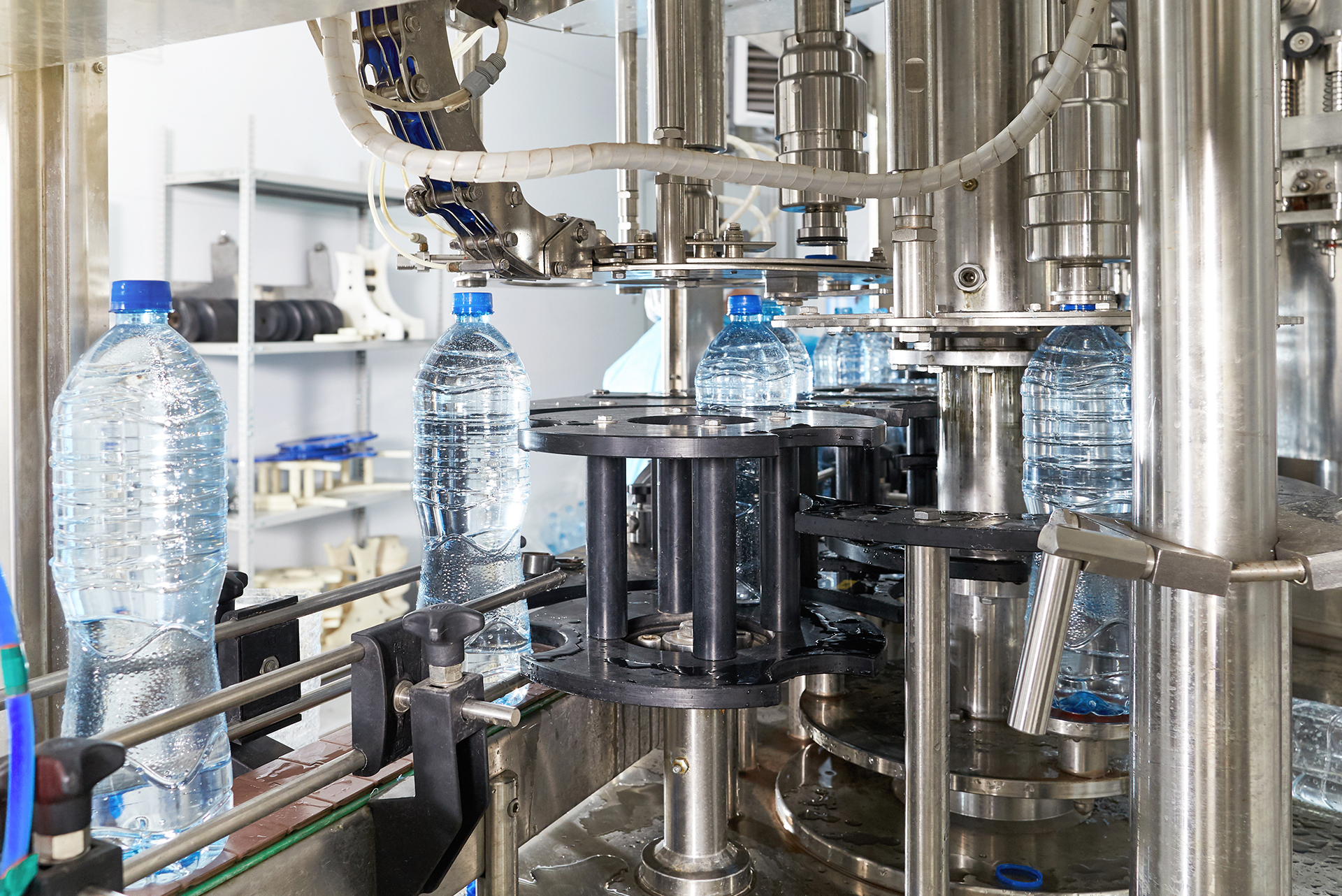
Requirements for machine concepts supporting format and product changeovers vary depending on market conditions and product strategies. While frequent format and product changes remain part of everyday production in many applications, other manufacturers deliberately reduce product variants to minimize complexity and costs.
For OEMs, however, the ability to adapt flexibly remains a critical factor. Machines must be able to process different container formats and closure variants without requiring extensive mechanical modifications for every changeover. Fast changeover times and reproducible settings are key to enabling efficient and reliable transitions between production formats.
Implications for Machine Concepts and Automation
The more simultaneously these requirements must be fulfilled, the more important the coordinated interaction of all influencing factors becomes. As mentioned earlier, purely mechanical concepts are increasingly reaching their limits. Consequently, automation is becoming a key success factor for OEMs in bottle capping applications.
At the center of this development is a machine architecture that closely integrates mechanics, drive technology, and control systems. This allows relevant process parameters to be configured precisely and continuously monitored throughout the capping process.
Precise Control and Monitoring
Servo-based capping heads enable highly accurate torque and angle control. The resulting process data make it possible to identify deviations at an early stage, assign them to individual stations, and use the information for diagnostics and quality assurance.
Flexibility Through Recipe Management
Automation also significantly simplifies product and format changeovers. Capping parameters can be stored in recipes and recalled automatically whenever a product change takes place. This reduces the need for manual adjustments while ensuring that predefined settings remain consistently reproducible.
Process Transparency Through Data Acquisition
Capturing relevant process data provides the foundation for traceability and targeted root-cause analysis. Deviations can be assigned to individual stations or capping heads, allowing problems to be located more quickly. At the same time, the data can be used for quality assurance and continuous process improvement.
End-to-End Automation for Flexible Machine Concepts
The requirements described above demonstrate that modern automated capping systems extend far beyond the control of individual machine functions. What matters is the coordinated interaction of control technology, drive systems, and process data acquisition within a comprehensive automation architecture.
This is where Bucher Automation comes in. Its automation solutions combine precise motion and process control with a scalable system architecture. This enables a wide variety of machine concepts and capping processes to be implemented while allowing modular expansion as requirements evolve.
Conclusion

The requirements placed on modern capping processes will continue to evolve. OEMs must therefore design machines not only for today's formats and production conditions but also with future adaptability in mind. End-to-end automation provides the foundation for this approach. By combining precise process control with flexible machine concepts, it enables manufacturers to meet future requirements without fundamentally redesigning their machine architecture.
Learn more about the products


Process Stability in Closing Operations: What Machine Builders Should Consider When Automating
FAQ
Why are conventional capping machines increasingly reaching their limits?
The requirements for containers, closures, and production lines have changed significantly. Thin-walled materials, new closure designs, and higher line speeds increase process complexity. Purely mechanical machine concepts are often limited in their ability to compensate for this variability.
How can different closure and container variants be processed on a single machine?
The key is a flexible machine architecture that can handle different formats and closure types without extensive mechanical changeovers. Automated parameterization and recipe management support fast and reproducible product changeovers.
What advantages do servo-based capping systems offer for OEMs?
Servo-based systems enable precise control of torque, angle, and motion. This allows capping processes to be controlled more accurately, process variations to be compensated for, and different product requirements to be covered with a single platform.
How can process reliability in capping applications be improved?
Continuous monitoring of relevant process parameters makes it possible to detect deviations at an early stage and analyze them in a targeted manner. This improves process repeatability and supports consistently high product quality, even under changing production conditions.
Why is the collection of process data becoming increasingly important for OEMs?
Process data provides transparency throughout the entire capping process. It simplifies root cause analysis, supports traceability requirements, and delivers valuable insights for the continuous optimization of machine performance and production processes.